
Femoral Acetabular Impingement
Femoral Acetabular Impingement
Understanding the hip joint and how FAI develops
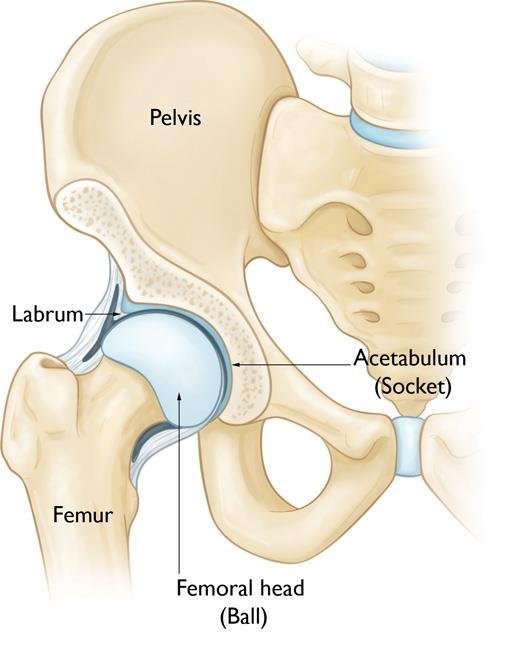
Your hip is a ball-and-socket joint. The femoral head (ball) at the top of your thigh bone normally fits smoothly into the acetabulum (socket) of your pelvis. In FAI, one or both, of these structures develop an abnormal shape, which leads to pinching during hip movement.
There are three types of FAI:
- Cam impingement
- Pincer impingement
- Combined impingement
This abnormal contact can occur during everyday movements such as sitting, squatting, twisting, or playing sport—and over time may lead to tearing of the labrum (the cartilage ring around the socket) and breakdown of joint cartilage.
FAI causes and risk factors
FAI usually develops during teenage growth years, when the hip bones are forming. It is not caused by anything you did wrong, but it may be more likely to occur if you:
- Participated in high-impact sports during adolescence (e.g. football, dance, basketball)
- Have a family history of hip conditions
- Experienced childhood hip disorders (such as hip dysplasia or Perthes disease)
- Have underlying joint hypermobility or previous hip injuries
Many people with FAI may not experience symptoms until their 20s or 30s, when structural contact starts to cause pain or damage.
Common symptoms of femoral acetabular impingement
Typical symptoms include:
- Deep aching pain in the groin or front of the hip
- Pain that worsens with activity, prolonged sitting, or hip flexion
- Clicking, locking, or catching sensations in the joint
- Reduced range of motion, particularly with twisting or bending
- Stiffness after rest
- Pain after sport or physical activity
How FAI is diagnosed
Assessment may include:
X-rays
X-rays – to visualise bone shape, femoral head contour, and socket coverage
Clinical Evaluation
Clinical examination – to assess your range of motion and identify pain triggers
MRI
MRI or MR arthrogram – to assess the labrum, cartilage, and signs of joint damage
CT scan (in some cases)
CT scan (in some cases) – to create 3D models for pre-surgical planning
Accurate diagnosis is essential for determining whether non-surgical or surgical treatment is the most appropriate option.
Non-surgical treatment options for FAI
Treatment options may include:
- Physiotherapy
- Activity modification
- Anti-inflammatory medications
When surgery is considered for femoral acetabular impingement
The hip arthroscopy surgical goals include:
- Reshaping the femoral head and/or acetabulum to prevent ongoing impingement
- Repairing or trimming the labrum to restore joint function
- Preserving your native hip joint and preventing progression to osteoarthritis
If you’re experiencing persistent groin pain, clicking in your hip, or difficulty with bending and twisting movements, an underlying structural issue such as FAI may be the cause. Early diagnosis and individualised treatment can help protect your hip joint and support your long-term mobility.