
Unicompartmental (Partial) Knee Replacement
UNICOMPARTMENTAL (PARTIAL) KNEE REPLACEMENT
Unicompartmental knee replacement, also known as partial knee replacement, is a surgical procedure that replaces only the damaged portion of the knee joint. Unlike a total knee replacement, which resurfaces all three compartments, this procedure targets only the affected area while preserving the healthy bone, cartilage, and ligaments.
This approach may offer faster recovery, less post-operative pain, and a more natural feeling knee compared to a total knee replacement, when the patient is carefully selected.
A less invasive surgical option for arthritis affecting one part of the knee
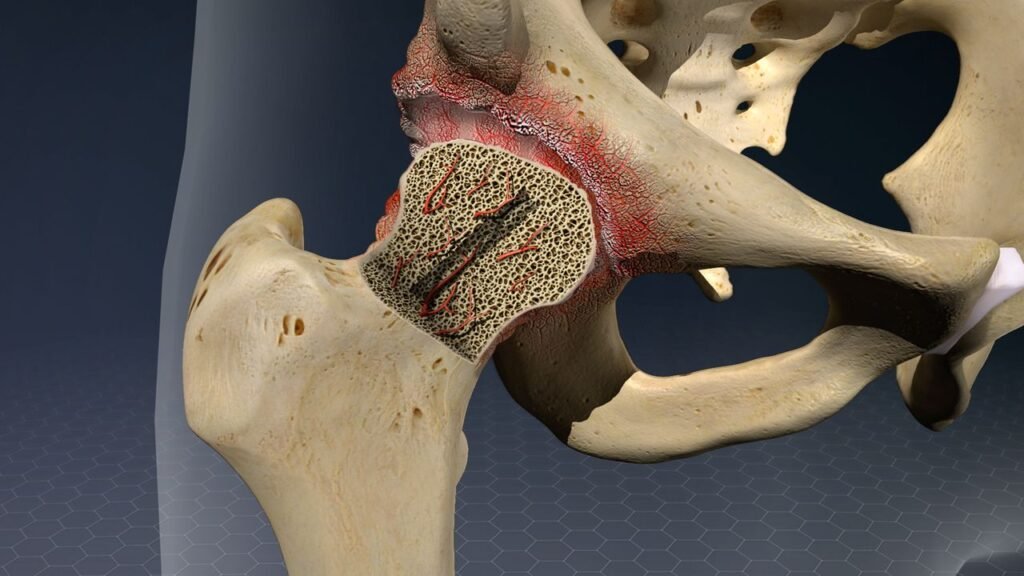
Understanding your knee joint
Your knee is made up of three compartments:
- The medial compartment (on the inner side of your knee)
- The lateral compartment (on the outer side)
- The patellofemoral compartment (between your kneecap and thighbone)
In many people with osteoarthritis, only one of these compartments is affected, most often the medial compartment. If the rest of your knee is still in good condition, you may not need a full knee replacement. Instead, a unicompartmental knee replacement, also called a partial knee replacement, may be recommended.
This procedure involves replacing just the damaged part of your knee while preserving the healthy bone, cartilage, and ligaments.
Who is a candidate for partial knee replacement?
Dr Paterson may discuss partial knee replacement with you if:
- Your arthritis is confined to just one compartment of your knee
- You still have a good range of motion and stable knee ligaments
- You haven’t had significant injury or arthritis in the rest of the knee
- Other treatments haven’t provided enough relief
Imaging such as X-rays and possibly an MRI scan will help confirm whether this is the right option for you.
Benefits of unicompartmental knee replacement
When appropriate, a partial knee replacement may offer several benefits compared to a total knee replacement:
1. Smaller incision and less disruption to your surrounding tissues
2. Faster recovery and return to daily activities
3. Less pain after surgery
4. More natural movement, as your healthy ligaments and knee structures are preserved
5. Lower risk of complications in some cases, such as infection or blood loss
6. Improved knee function, especially during walking and bending
The Unicompartmental knee replacement surgical procedure: what to expect
Your surgery will usually be done under spinal or general anaesthesia. The steps include:
- A small incision is made to access the affected part of your knee.
- The damaged bone and cartilage are carefully removed.
- Your surgeon shapes the area to fit the implant components.
- A metal cap is placed on the end of your thighbone, and a matching metal plate is placed on your shinbone.
- A plastic insert is positioned between the metal parts to allow smooth movement.
- The rest of your knee, including your healthy cartilage and ligaments, is left intact.
Once the implant is in place, your knee is tested for movement and stability before the incision is closed.
Recovery and rehabilitation following partial knee replacement surgery
One of the benefits of a partial knee replacement is that recovery is often quicker than with a total knee replacement.
- You’ll usually begin walking with the help of a physiotherapist on the same day or the day after surgery.
- Most people go home within one or two days.
- Crutches or a walker may be needed for the first week or two.
- Your physiotherapy program will help you regain movement, build strength, and improve confidence in your knee.
- By six weeks, many people return to most everyday activities. Low-impact exercise such as walking, cycling, and swimming is encouraged, but high-impact activities like running or jumping are generally not recommended.
Dr Paterson and your rehabilitation team will support you every step of the way.
Unicompartmental knee replacement risks and potential complications
All surgical procedures carry some risk. While most people recover well, some possible complications include:
- Infection
- Blood clots (deep vein thrombosis)
- Knee stiffness
- Loosening or wear of the implant over time
- Progression of arthritis in the other compartments of your knee
- Nerve or blood vessel injury (rare)
- Need for further surgery in the future, such as conversion to a total knee replacement
Dr Paterson will discuss the risks that are relevant to you during your consultation.
How long does a partial knee replacement last?
Most partial knee replacements last more than 10–15 years, especially if you follow your rehabilitation plan and avoid high-impact activity. If arthritis develops in other parts of your knee later on, further treatment may be needed, which could include converting to a total knee replacement.
Is partial knee replacement right for you?
Most partial knee replacements last more than 10–15 years, especially if you follow your rehabilitation plan and avoid high-impact activity. If arthritis develops in other parts of your knee later on, further treatment may be needed, which could include converting to a total knee replacement.